The ESP32 IoT LAN device is an integrated, industrial control and data acquisition suite 08 Digital Input 24VDC, 01 RS485 Modbus RTU port, 01 control relay, 01 alarm contact (Alarm Contact) and Real-time RTC. Devices that support connection LAN Ethernet and LoRa 3–8 km, allows monitoring and collecting data from sensors, PLCs, electricity meters, flow, pressure... Data is transmitted to Cloud, SCADA or Web/App for remote monitoring, warning and control. Suitable for problems of incident warning, output counting, device status monitoring and industrial IoT systems.

IoT Gateway (model: MEI_MT03)
Products
IoT Gateway (model: MEI_MT03)
The ESP32 IoT LAN device is an industrial control and data acquisition unit, designed for remote monitoring applications in factories, pumping stations, water supply systems, energy, smart buildings and IoT projects. The device uses an ESP32 microcontroller combined with a LAN Ethernet connection, ensuring stable, high-speed data transmission and continuous operation.
Equipment is equipped 08 Digital Input channels 24VDC to monitor the status of sensors, limit switches, fault contacts, PLCs and industrial signals. 01 RS485 port Supports Modbus RTU protocol allowing connection of electricity meters, water meters, pressure sensors, flow, temperature, humidity, water level, inverters and many other measuring devices.
In addition, integrated equipment 01 control relay Serving to turn on/off devices remotely or according to schedule, together 01 alarm contact output (Alarm Contact) to activate horns, warning lights or transmit signals to PLC and SCADA when problems occur. RTC (Real-Time Clock) helps keep accurate time, supports event logging, statistics and control scheduling even during power outages.
The device is also integrated LoRa with communication range 3–8 km (depending on deployment conditions), allowing the connection of wireless sensors at long distances, reducing cabling costs and expanding the monitoring system to a large area.
Data is transmitted to the Cloud platform, SCADA or internal server via LAN Ethernet, supporting real-time monitoring on the Web and mobile applications, displaying graphs, saving history, statistics and sending instant alerts.
Typical applications:
Monitor the status of pumps, motors, fans, valves, electrical cabinets and production lines.
Warning about power loss, connection loss, machine stoppage, overvoltage, overheating, sensor error, PLC or inverter error.
Count output, count products, count Encoder pulses, optical sensors and number of device operations.
Collect data from sensors and Modbus RTU devices.
Control Relay by schedule, by threshold or remotely via Web/App.
Record events in real time and export reports for management and maintenance.
With industrial design, flexible scalability and support for many communication standards, the ESP32 IoT LAN device is an effective solution for monitoring, warning, data collection and remote control problems, contributing to improving operational efficiency and promoting digital transformation in businesses.
TECHNICAL SPECIFICATIONS
ESP32 IoT LAN DEVICE – INDUSTRIAL MONITORING AND DATA COLLECTION SET
The ESP32 IoT LAN device is a data collector and industrial control unit developed on the high-performance ESP32 microcontroller platform. The device integrates many communication and I/O standards, meeting the problems of monitoring, warning, control and data collection in factories, water supply systems, energy, smart buildings and technical infrastructure.
With a high-speed Ethernet LAN connection, data is continuously transmitted to the Cloud system, SCADA or internal server, allowing users to remotely monitor and control via the Web or mobile application.
Outstanding features
High performance ESP32 microcontroller, stable operation 24/7.
High-speed Ethernet LAN connection, stable data transmission.
08 Digital Input channels 24VDC Monitor industrial equipment status.
01 RS485 port Supports Modbus RTU to connect sensors, PLCs, inverters, electricity meters, flow meters...
01 control relay remote or scheduled devices.
01 alarm contact output (Alarm Contact) to activate horns, lights or transmit warning signals to other systems.
RTC (Real-Time Clock) Built-in, keeps accurate time even when power is lost.
Integrated LoRa communication with distance 3–8 km (depending on deployment conditions), helps connect sensors and devices in remote locations without pulling cables.
Real-time data and event logging.
Supports control by schedule, by condition or by automatic scenario.
Supports Cloud, Web, App, SCADA connection and centralized management system.
Industrial design, high reliability, suitable for continuous operation.
Connectivity
Digital Input 24VDC
08 channels receive 24VDC digital signals.
Monitor the ON/OFF status of the device.
Receive signals from sensors, limit switches, relay contacts, PLCs, inverters and industrial devices.
RS485 Modbus RTU
Connects to many types of devices such as:
Electric clock.
Water meter.
Pressure sensor.
Flow sensor.
Temperature and humidity sensor.
Water level sensor.
PLC.
Inverter.
Industrial measuring equipment.
Relay Output
Control on/off device.
Scheduled control.
Threshold control.
Control from Web/App.
Control according to automatic scenarios.
Alarm Contact
Warning contacts are used to:
Activate the siren.
Activate the warning light.
Report problems to PLC or SCADA.
Activate the external alarm system.
Real-time RTC
Save the exact time.
Event logging.
Time stamp the data.
Schedule automatic control.
Maintains time when power is lost.
LoRa Communications
Transmission distance 3–8 km (ventilated environment).
Low energy consumption.
Connect multiple wireless sensors.
Suitable for distributed measurement points.
Reduce signal cabling costs.
Expand IoT system on a large scale.
Applied math problems
Monitor device status
Pump.
Engine.
Industrial fan.
Electric valve.
Air compressor.
Electrical cabinet.
PLC.
Production line.
Warning system
Power loss warning.
Phase loss warning.
Overvoltage and undervoltage alerts.
Overheat warning.
Abnormal pressure warning.
Water level warning.
Door open warning.
Fire alarm warning.
Burglar alarm.
Warning the device stops working.
Warning about loss of communication connection.
Sensor error warning.
Inverter error warning.
PLC error warning.
Counting problem
Counting line output.
Count products.
Count the number of bags.
Count the number of bottles.
Count the number of boxes.
Count the number of door opening/closing times.
Count the number of vehicle turns.
Count the number of times the device is operated.
Count Encoder pulses.
Count optical sensor pulses.
Count the machine's operating cycles.
Collect data
Temperature.
Humidity.
Pressure.
Flow.
Water level.
Electricity.
Water meter.
Electric clock.
Modbus RTU sensors.
Remote control
Relay control.
Start/Stop the device.
Scheduled control.
Threshold control.
Control over time.
Controlled by sensor data.
Control via Web or App.
Centralized monitoring
Display real-time data.
Intuitive dashboard.
Historical chart.
Event log.
Production statistics.
Statistics of operating time.
Report by hour, day, month and year.
Manage multiple devices on the same platform.
Application field
Manufacturing factory.
Water supply system.
Pump station.
Wastewater treatment system.
Food factory.
Pharmaceutical factory.
Beverage factory.
HVAC system.
Smart building (BMS).
Solar energy.
Power station.
Smart farm.
Cold storage.
Warehouse.
Technical infrastructure system.
Industrial IoT projects.
Benefits brought
Reduce operating and labor costs.
Detect problems early, reduce machine downtime.
Centralized monitoring anytime, anywhere.
Increase system reliability and safety.
Easily expandable when adding sensors or devices.
Optimize management, maintenance and operations.
Improve production efficiency and digital transformation in businesses.
Technical specifications are subject to change.
Products for the same solution
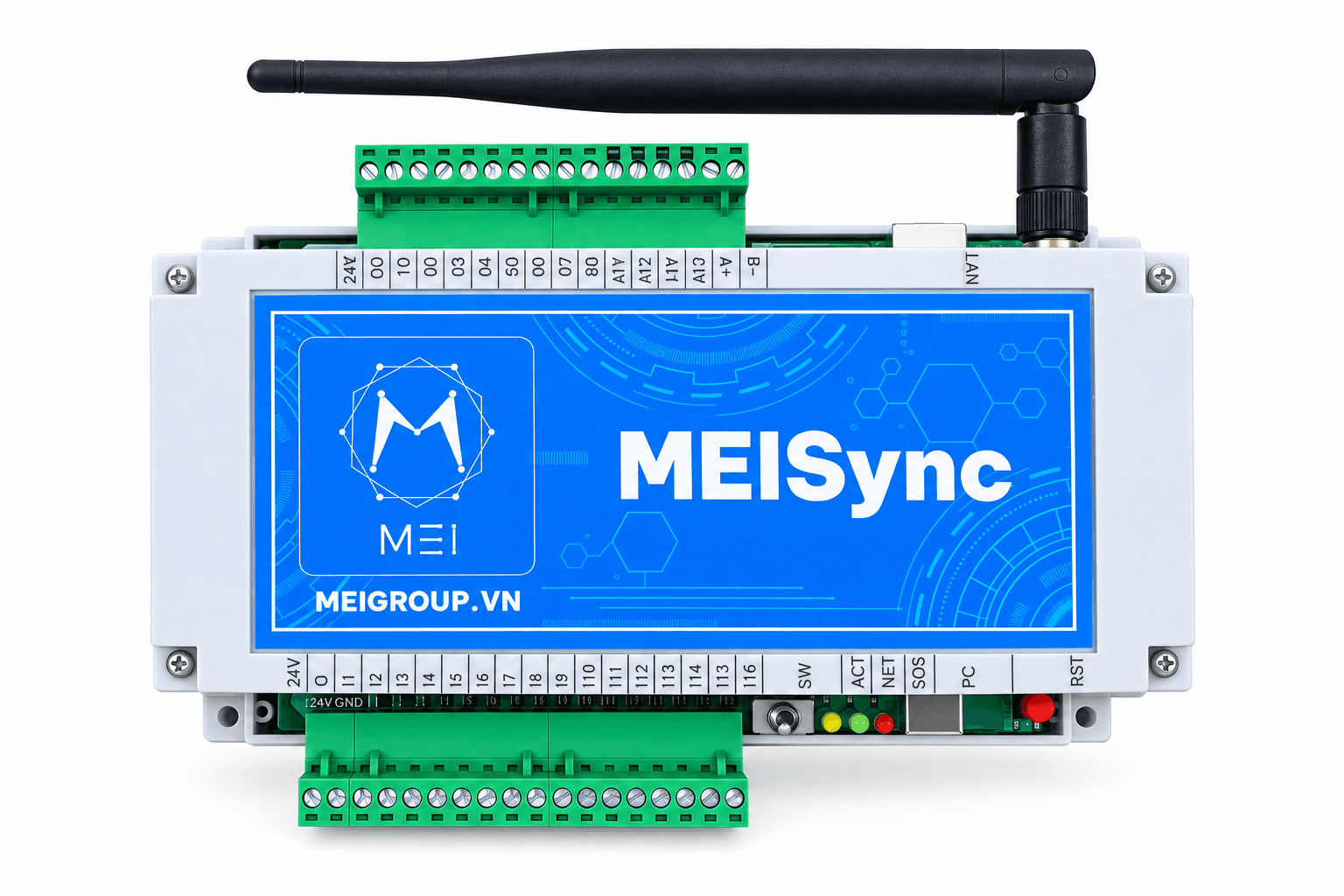
Water and wastewater quality monitoring device (internal monitoring)
Equipment for monitoring water and wastewater quality MEI GROUP research and development, supports connecting sensors via 4–20 mA, RS485/Modbus RTU and Digital Input. Data is collected, processed and transmitted Server via LAN or Wi-Fi, and save at least Offline 100 days with a cycle of 5 minutes/time. When the network is restored, the device automatically synchronizes data. Platform Web/App allows real-time monitoring, viewing graphs, history, setting alarms, exporting reports and managing mult
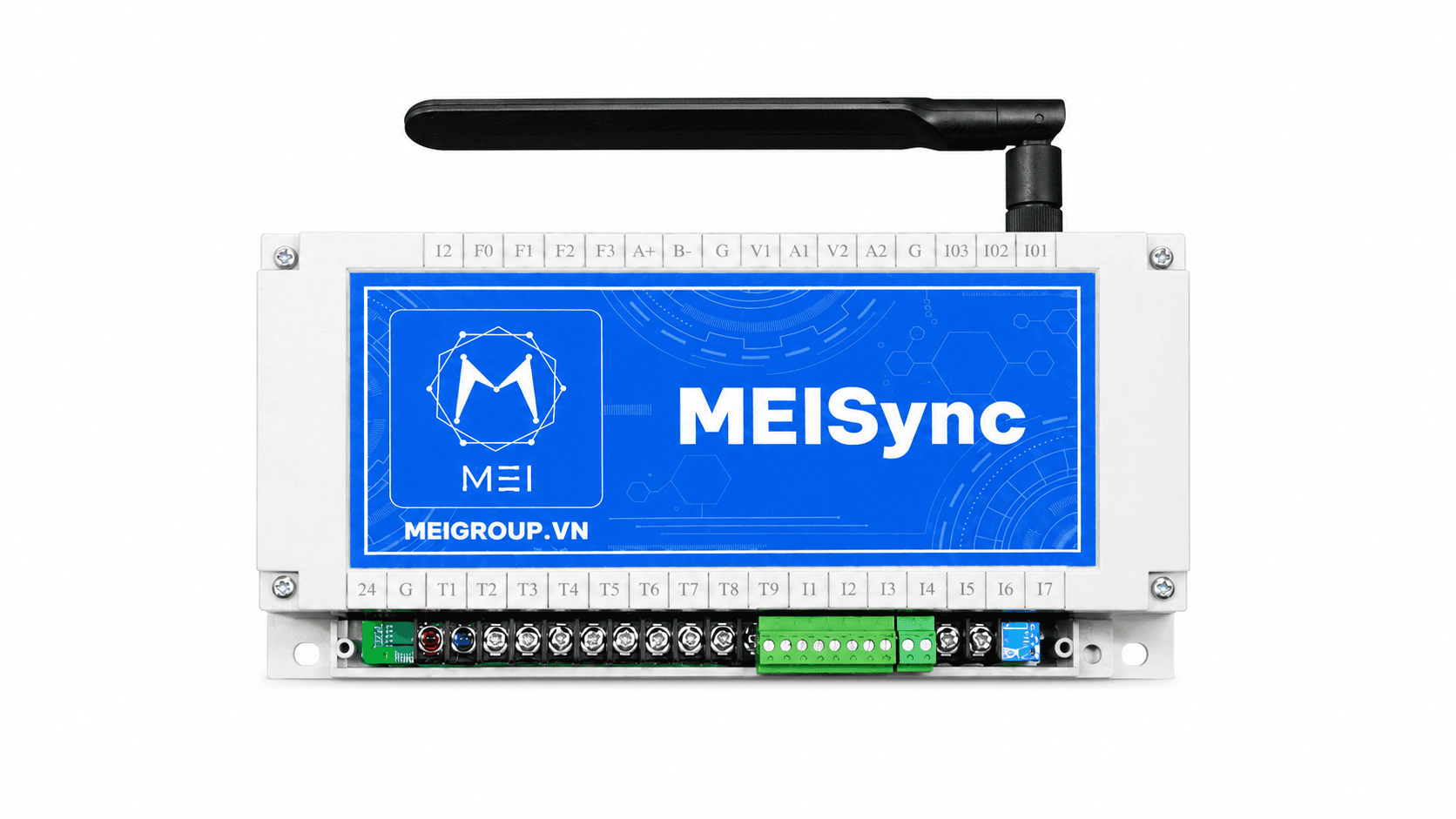
MEISync - CTG.100
MEISync is an industrial IoT controller that integrates 10 Relays, Ethernet LAN, real-time RTC and large capacity Winbond memory. The device allows automatic control according to schedule, multiple operating hours and remote control via Web/App. Data and activity history are saved locally and automatically synchronized when there is a network connection. Supports remote OTA, anti-crash Watchdog, backup firmware and self-recovery mechanism, helping the system operate stably 24/7 in lighting, auto
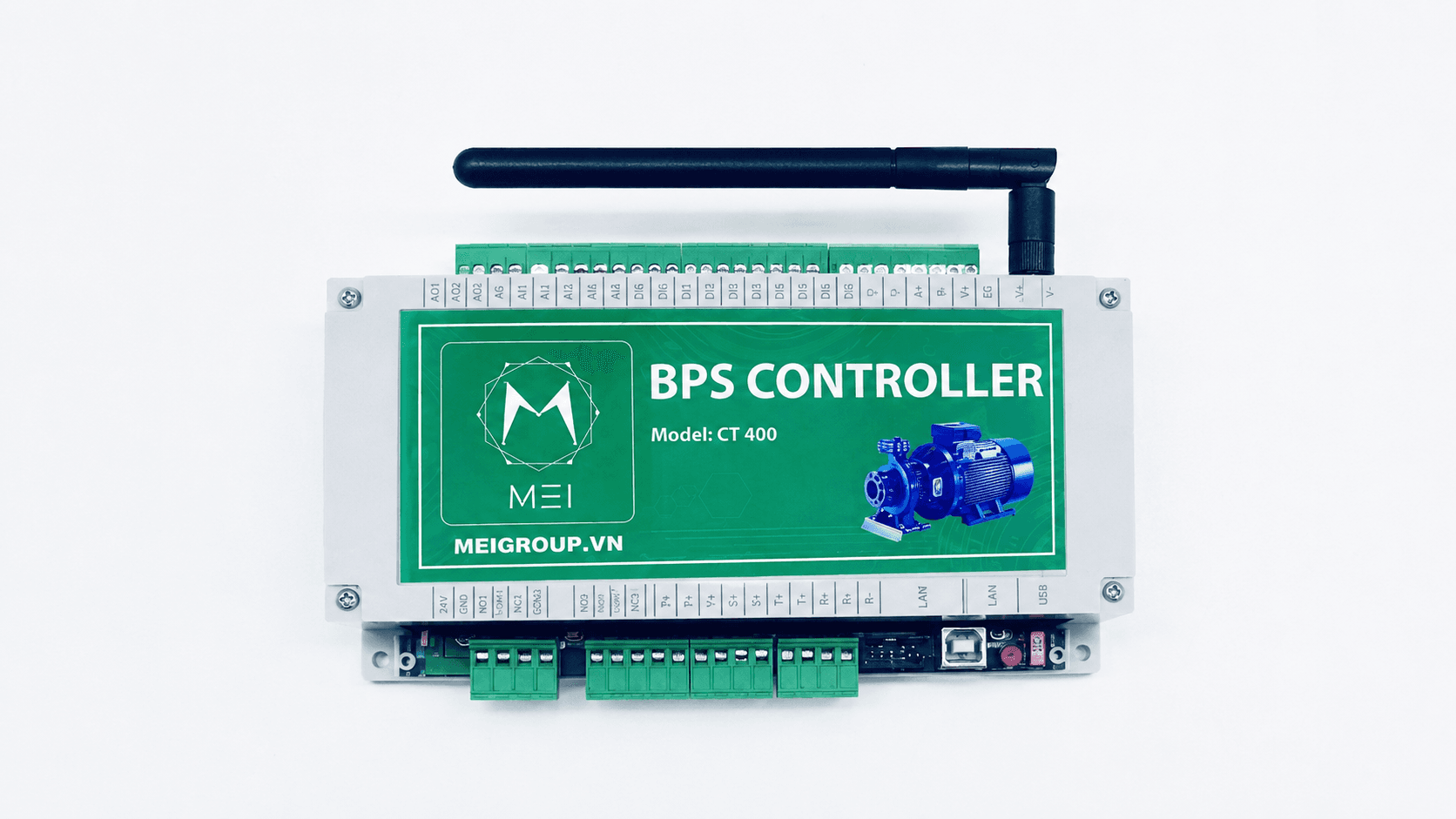
BPS CONTROLLER – CT.400
BPS Controller – Model CT.400 is an industrial controller and monitor made by MEI Group research, design, development, and use STM32F407 high performance. Integrated equipment 4G LTE, RS485/Modbus RTU, 03 AI 4–20 mA, 10 DI (0–24 VDC), 10 Relay DO, 03 AO 0–10 V and 03 AO 4–20 mA, allowing connection to sensors, inverters, power meters, HMIs and many industrial devices. CT.400 supports configuration and OTA firmware update remotely, save data when connection is lost and automatically synchronize t
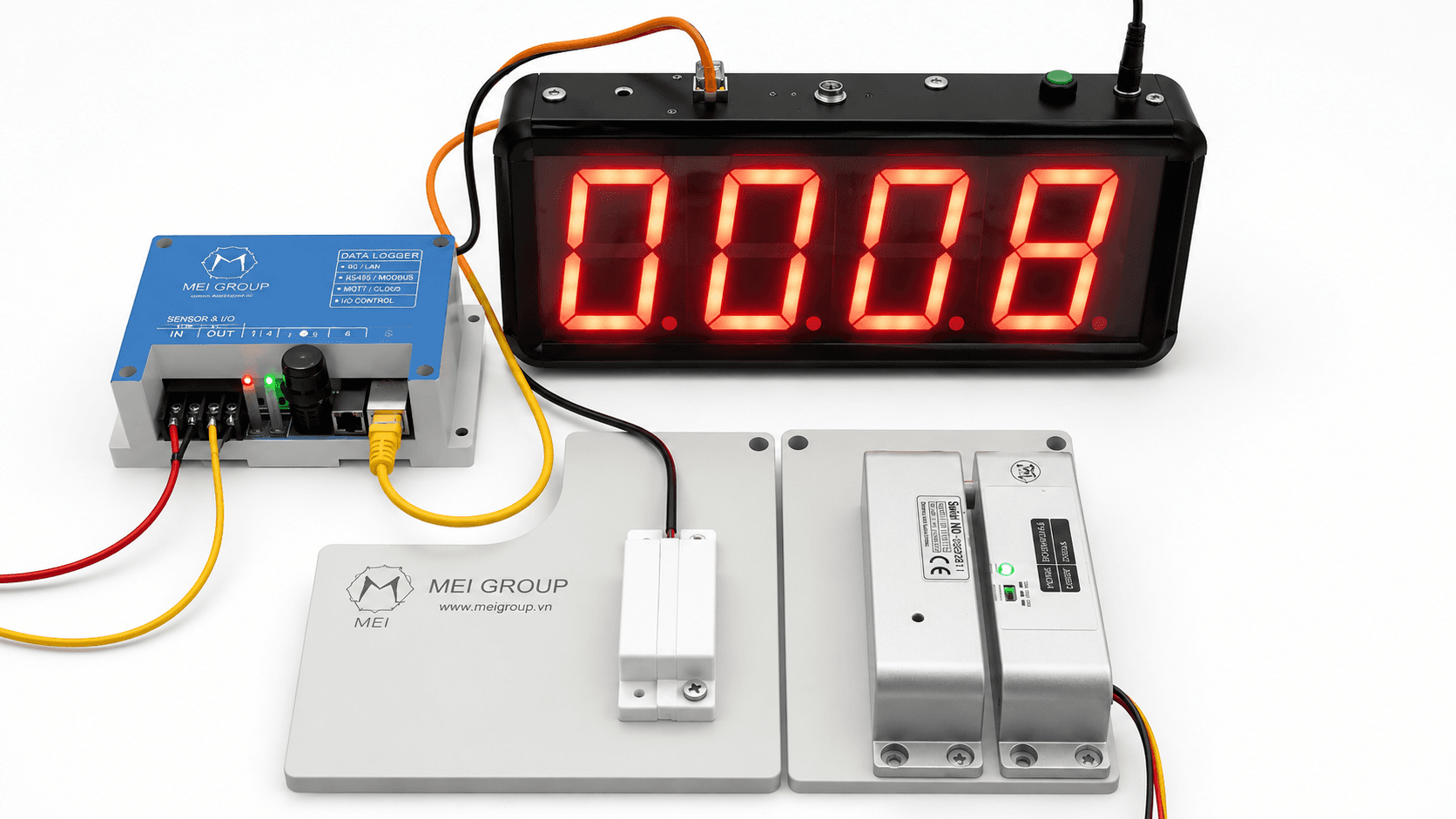
Door monitoring
MEI access control and monitoring system is the solution IoT Access Control Use microcontroller STM32, connect Ethernet (LAN) to manage factory entrances and exits in real time. Support equipment RFID card reader, people counting sensors and controls Magnetic Lock, allows opening by card, Web/App or according to set time frame. The number of people remaining in the area is shown above 7-segment LED display. Integrated system emergency push button to unlock when escaping, support Offline Data Log
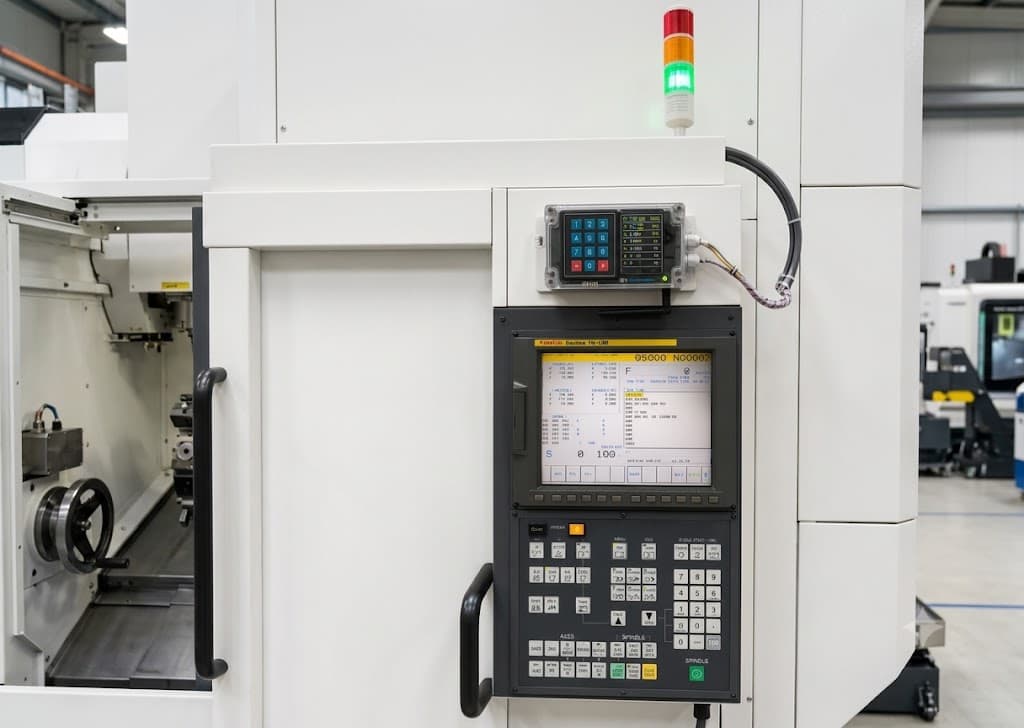
CNC machine monitoring
MEI CNC machine output monitoring system is a set IoT Edge Data Logger Use microcontroller STM32, collect signals from Stack Light without intervention in the PLC or CNC program. The device automatically determines the status Run, Idle, Alarm, Setup, calculate output and indicators OEE in real time. Connection support system Wi-Fi or LoRa, transmit data to the platform MEI ECO via protocol MQTT, integrated Offline Data Logging, automatically synchronizes data when connection is restored and supp
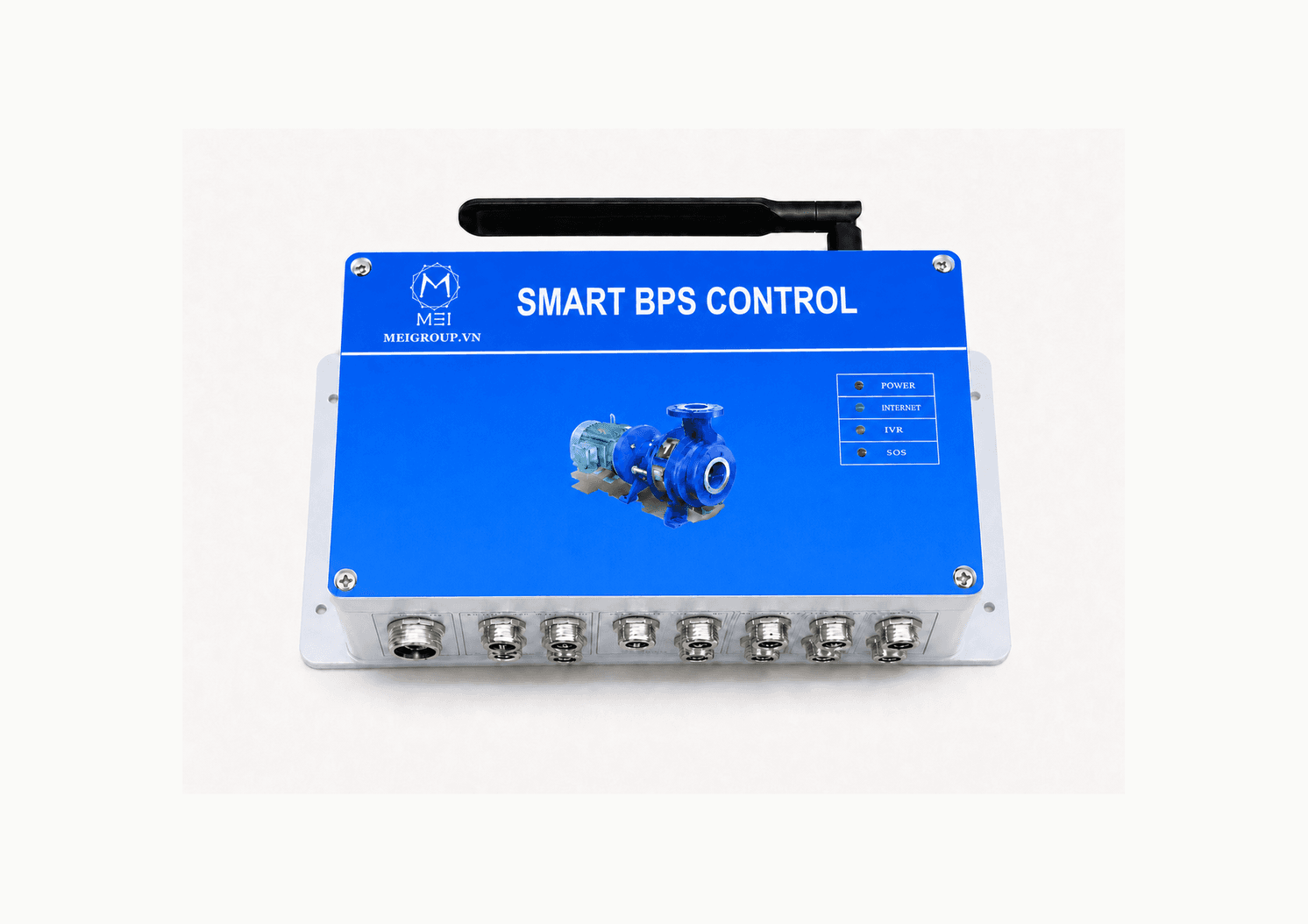
BPS Controller - CTG.300
Pump station pressure regulation equipment of MEI GROUP is a specialized controller that helps maintain stable pressure on the water supply network by adjusting the inverter frequency accordingly critical pressure point. The device collects pressure data from 4–20mA sensors at the station or from remote pressure nodes via LoRa, combines Modbus/RS485 data to calculate and control the inverter in real time. Support equipment many operating hours, each time frame has its own pressure setpoint and fr
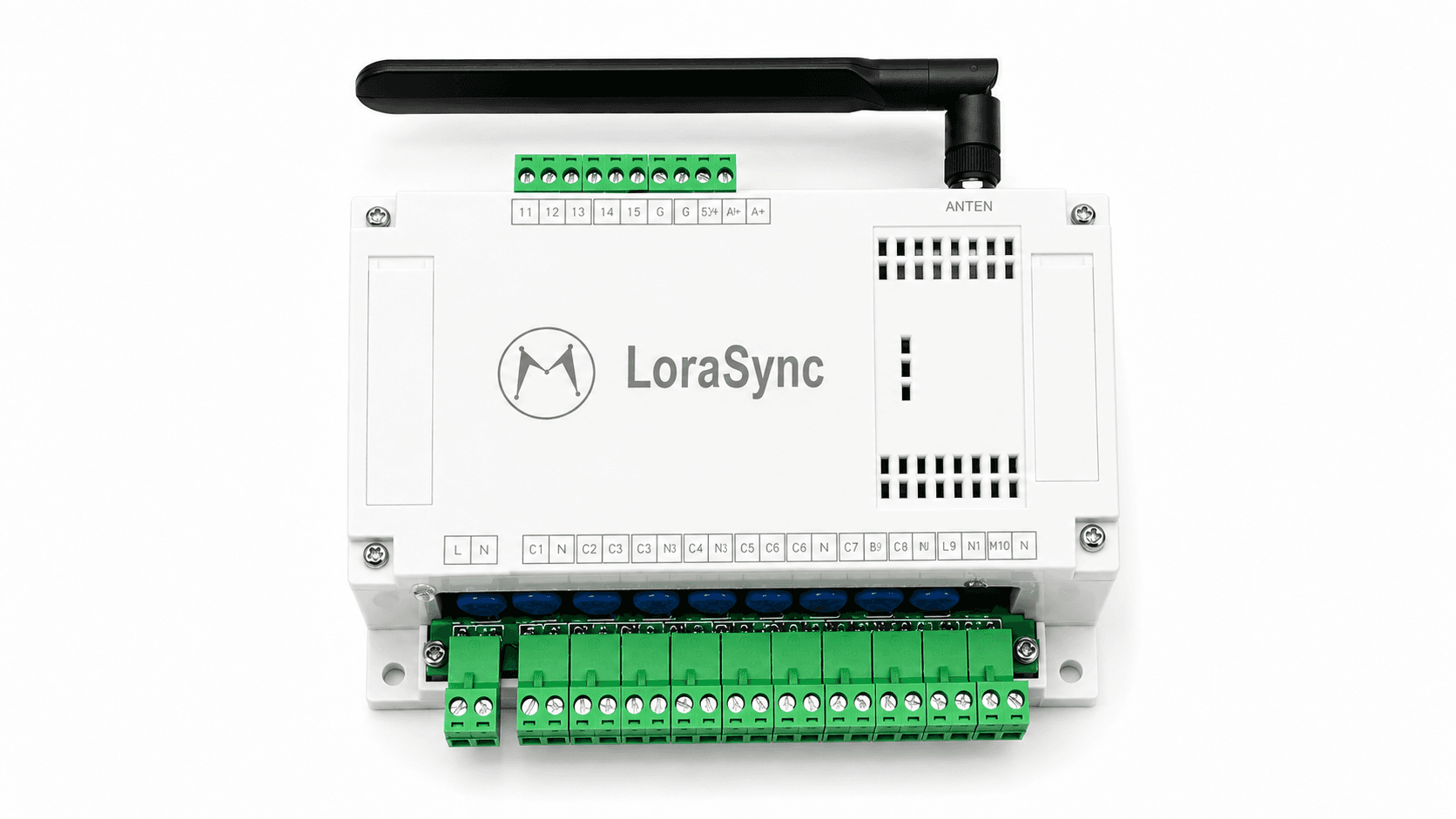
LoraSync - LR.100
Monitoring and control equipment LoRa MEI is an industrial IoT solution for factories, pumping stations and technical infrastructure. Device uses power 220VAC, integrated 01 RS485 Modbus RTU, 04 Digital Input 0–24VDC and 10 Relay Output 220VAC to collect data, monitor status and control devices remotely. Technology LoRa Allows long-distance communication, reduces wiring costs and is easy to deploy on a large scale. Connect to the platform MEI Eco Web/App, the device supports real-time monitoring
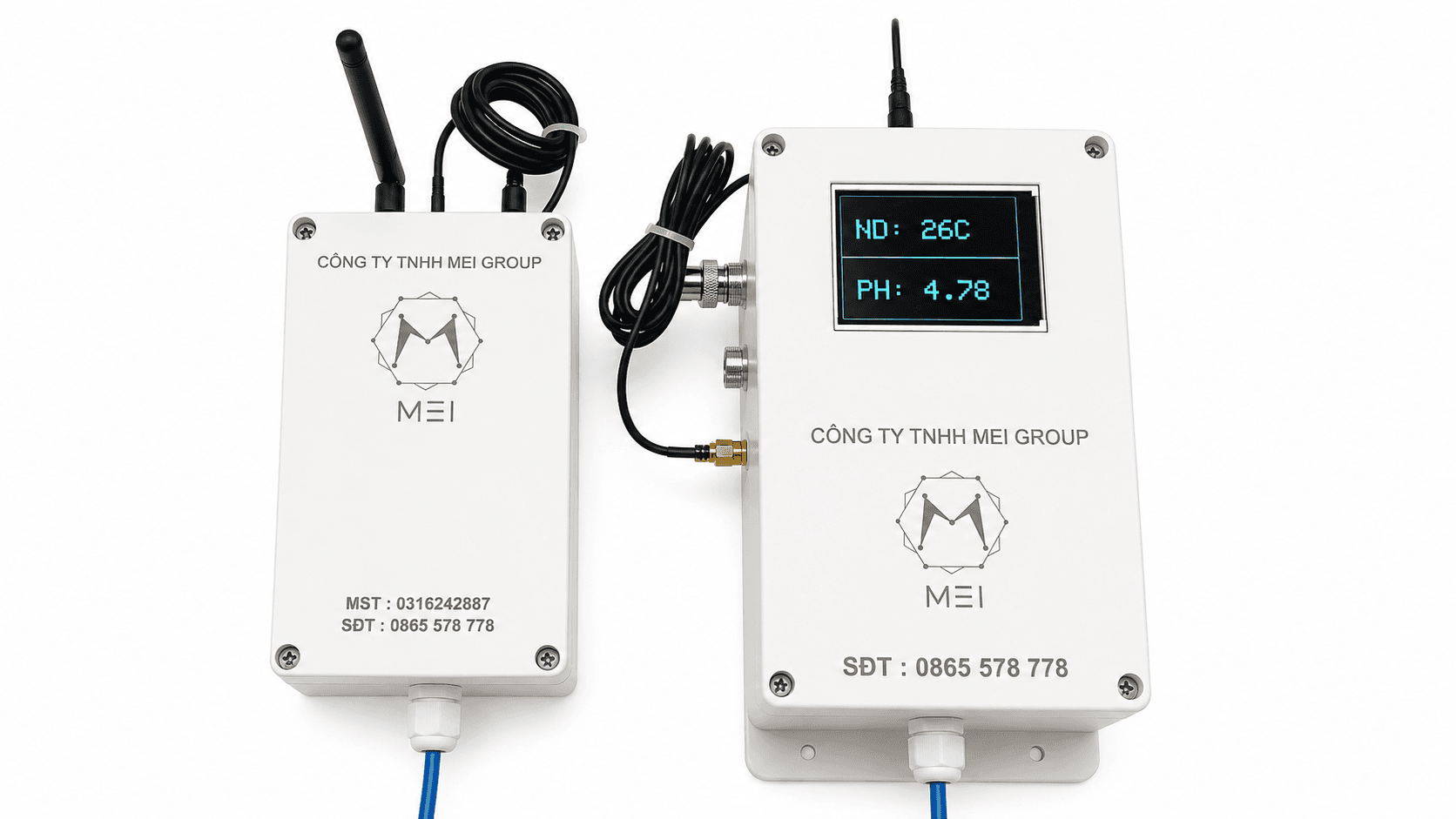
Remote sensor monitoring
The system monitors temperature and pH through LoRa MEI is the solution IoT uses STM32, allowing data to be collected from multiple LoRa Sensor Node and transmitted LoRa Master Gateway. Gateway displays data on the screen, while connecting Ethernet (LAN) or Wi-Fi to transmit data to the platform MEI ECO via protocol MQTT. The system supports sensor connection RS485 Modbus RTU, 4–20 mA or Analog, set alarm threshold and send Push Notification when the parameter exceeds the limit. Both Sensor Node
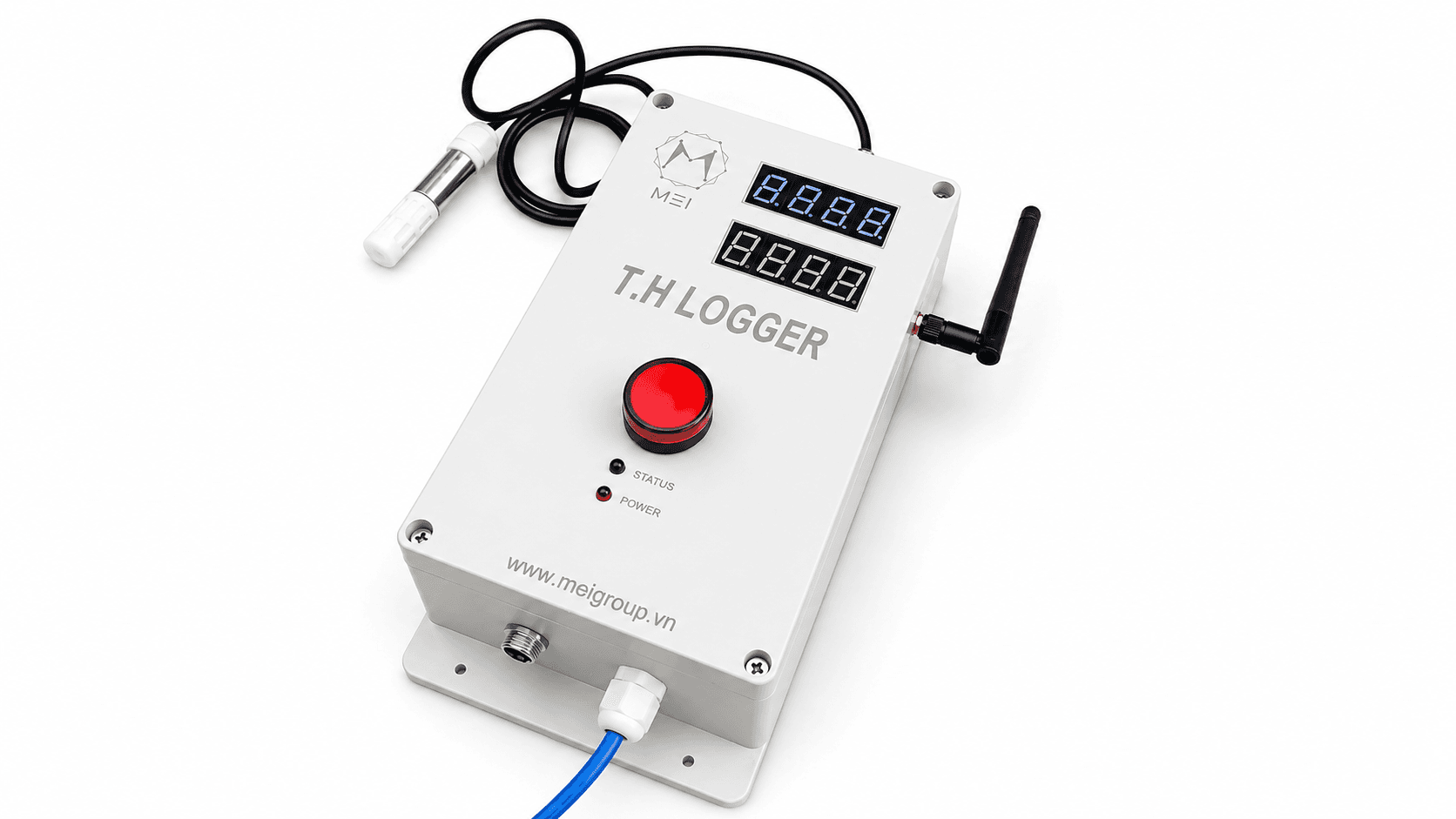
Factory temperature and humidity monitoring
The MEI temperature and humidity monitoring system is an IoT solution that uses sensors SHT30 and controller STM32 to monitor environmental conditions in real time. Devices that support connection Wi-Fi or Ethernet (LAN), display temperature and humidity above 7-segment LED and Web/App platform. The system allows configuration of alarm thresholds, local horn activation and sending Push Notification when parameters exceed limits or the device has a problem. Data is stored offline when connection
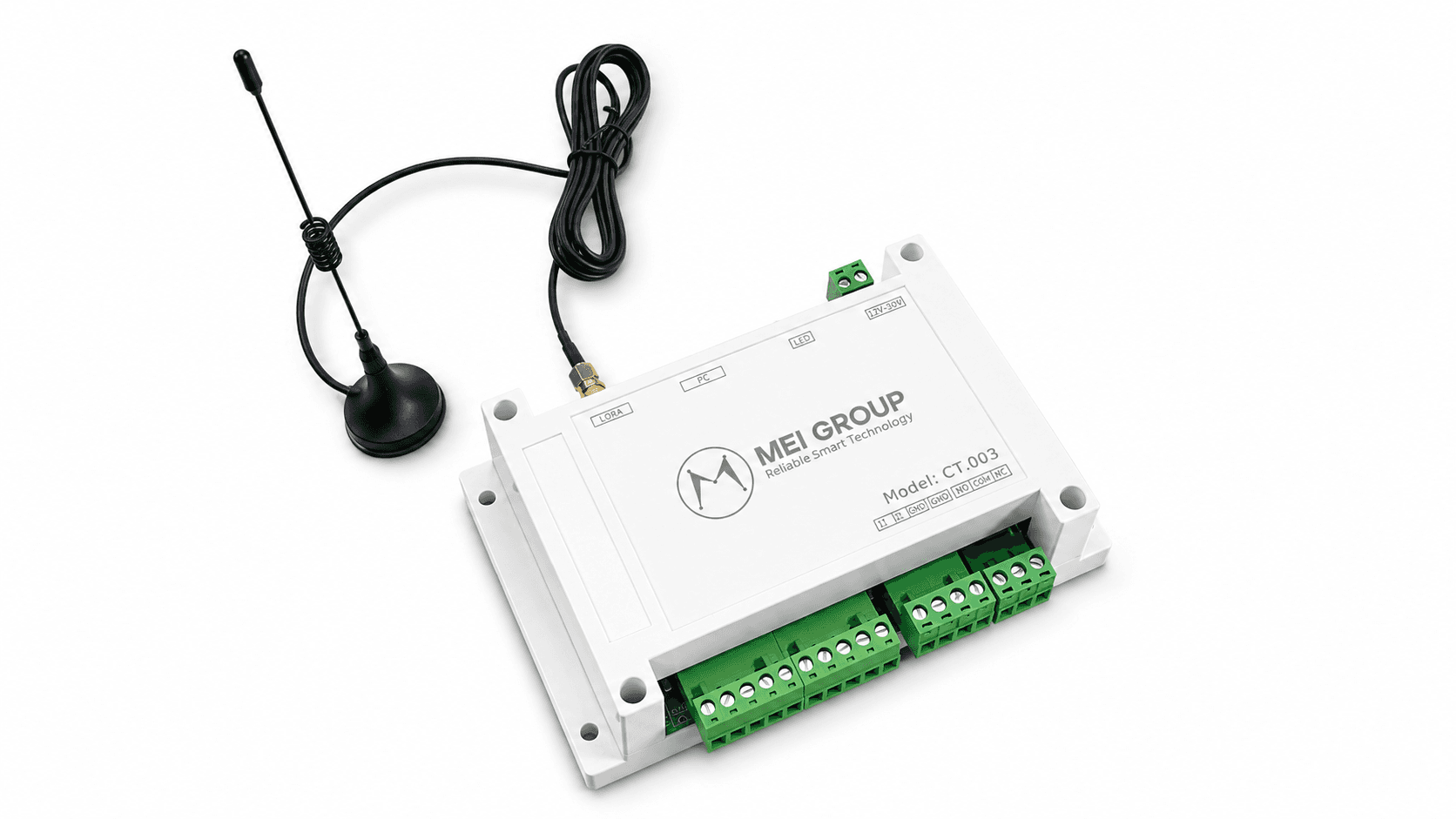
Lora Node (Model: CT003)
MEI GROUP CT.003 is a fire alarm signal receiver using LoRa technology, allowing real-time monitoring of system status on the Web and App. The device supports instant alerts when problems occur, stores operation history and remotely monitors connection status. Compact industrial design, installed directly in electrical cabinets or fire alarm cabinets, suitable for factories, buildings, warehouses and commercial centers.
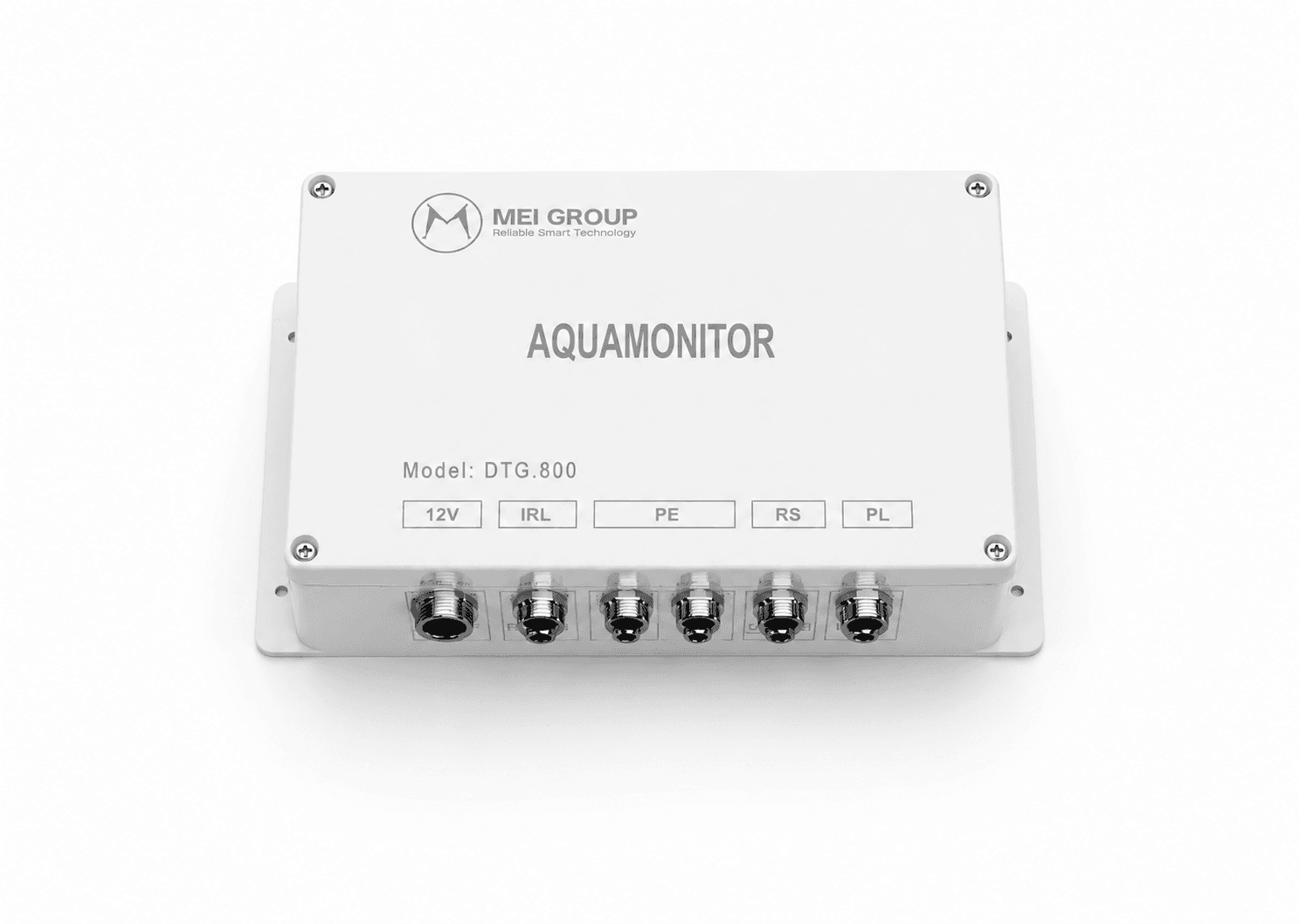
AQUAMONITOR - DTG.800
The MEI Datalogger device monitors the wastewater treatment system, collecting data from sensors via RS485 (Modbus RTU), pulse input and 4–20mA analog signals such as pH, COD, TSS, DO, flow, water level. The device is capable of controlling the sampler automatically by time or flow, and recording full event logs. Data is stored in parallel online and offline, automatically sent compensation when there is a network outage and safely backed up when there is a power outage. The system connects to th
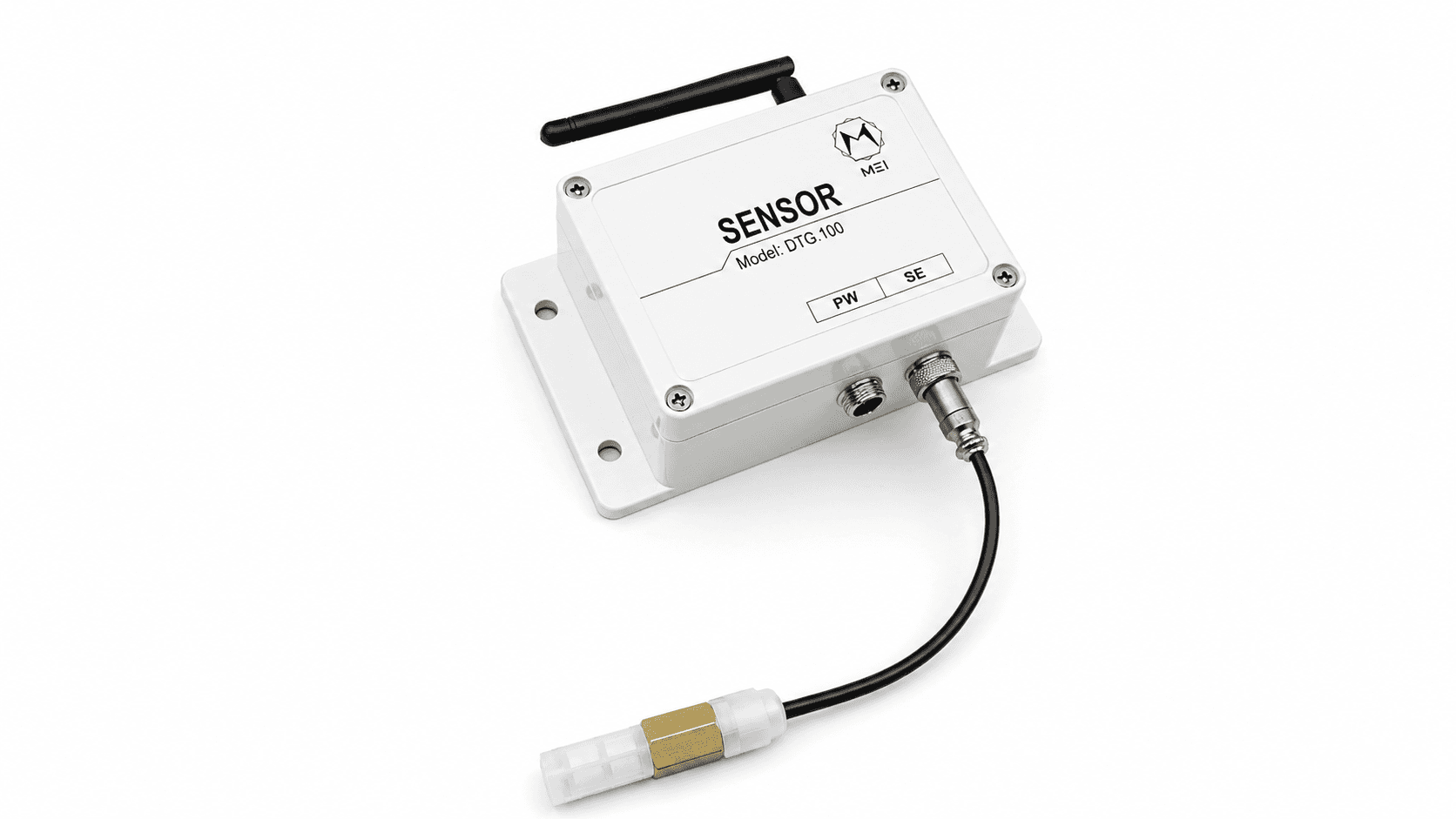
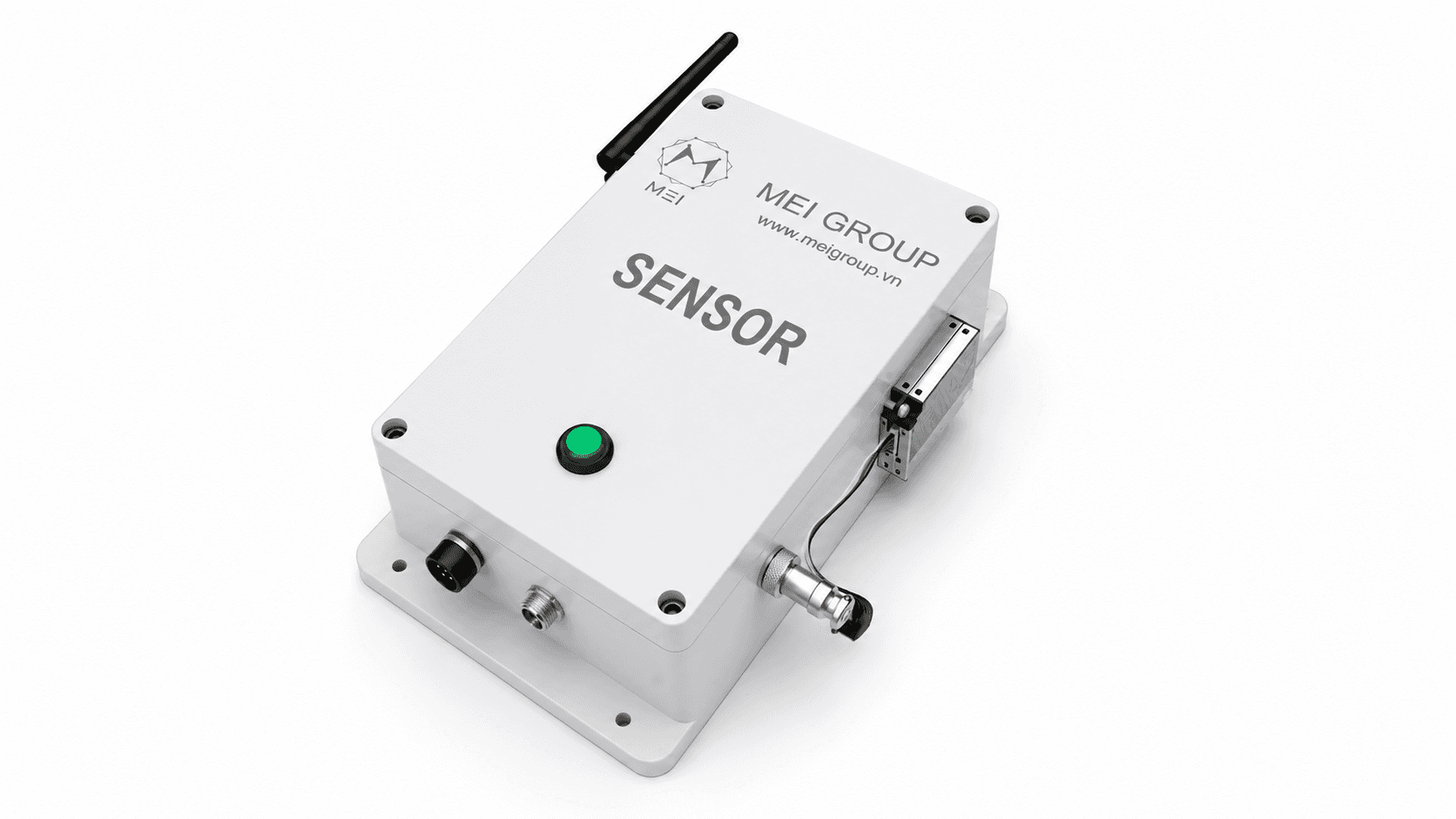
SENSOR - DTG.100
MEI's temperature and humidity monitoring device is an industrial IoT solution connected to WiFi, transmitting data directly to the platform. MEI Eco Web App for centralized monitoring and management. The device accurately measures environmental temperature and humidity, suitable for installation in factories, cold storages, server rooms, agricultural greenhouses and technical electrical cabinets. Data is updated in real time, displayed on an intuitive dashboard with hourly, daily, and monthly ch
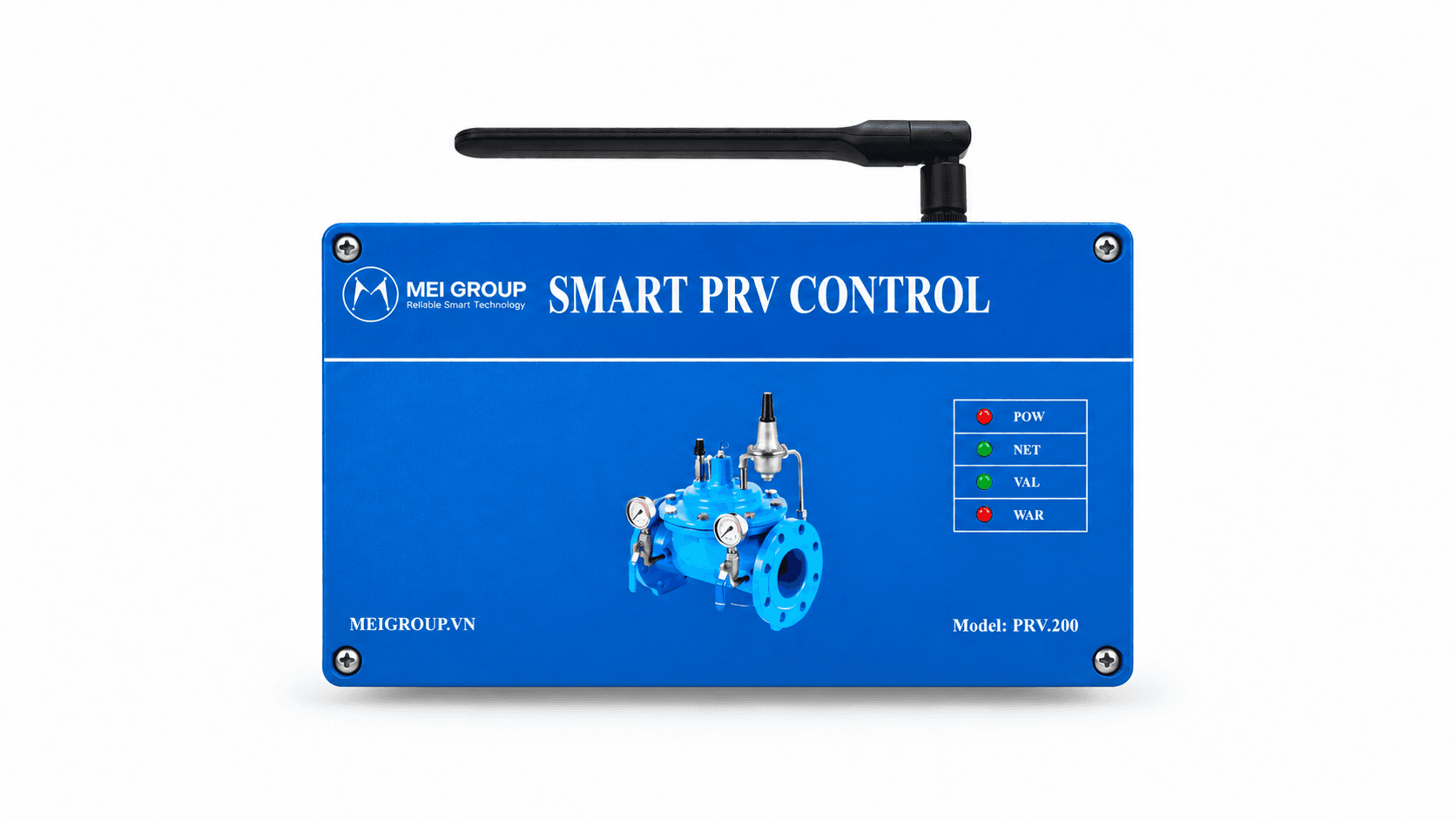
SMART PRV - PRV.03
The MEI pressure monitoring and regulation system is the solution IoT Use microcontroller STM32, specializes in monitoring pressure and flow in water supply networks, and automatically controls pressure regulating valves to maintain stable pressure and reduce water loss. The device supports pressure sensor connection 4–20 mA, flow meter RS485 Modbus RTU and transmit data directly to the platform MEI ECO qua 4G LTE use protocol MQTT. The system operates by Solar energy combined with rechargeable
Fine particulate matter monitoring
MEI dust monitoring system is the kit IoT Data Logger Use microcontroller STM32, supports dust sensor connection PM1.0, PM2.5, PM10 qua UART or RS485 Modbus RTU to monitor air quality in factories and outdoors. Connected devices 4G LTE, Wi-Fi or Ethernet (LAN), transmit data to the platform MEI ECO via protocol MQTT. Support system Continuous Mode and Low Power Mode, integrated Offline Data Logging, automatically synchronizes data when connection is restored and supported Remote firmware update
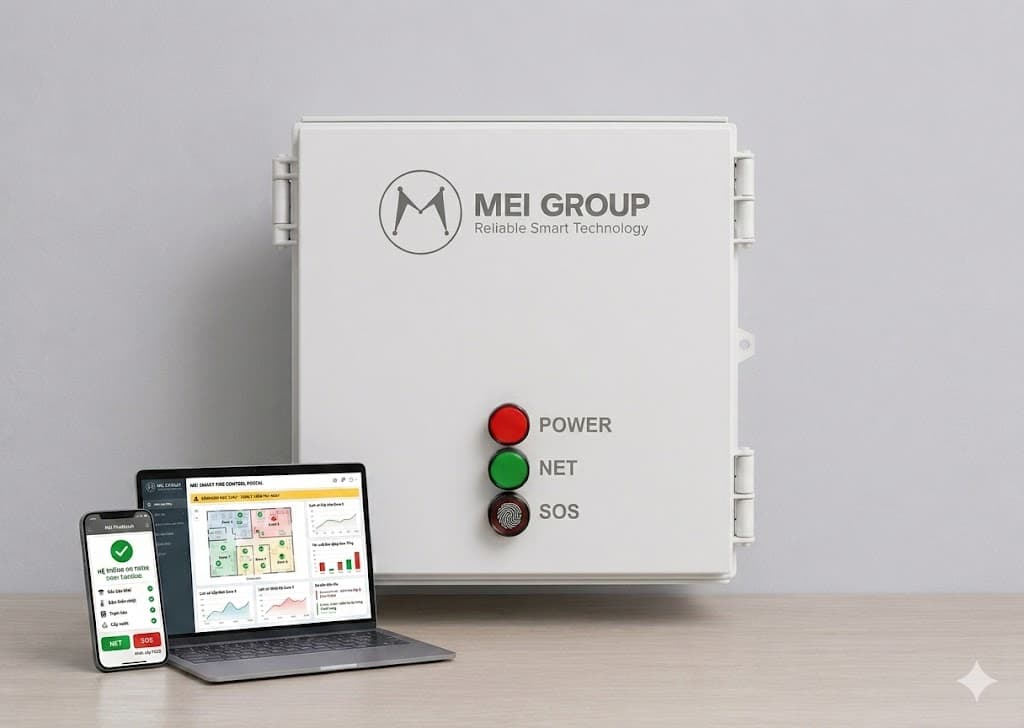
Fire alarm monitoring
MEI GROUP's smart fire alarm equipment is a specialized IoT solution for factories, warehouses and buildings, meeting the requirements of continuous safety monitoring and centralized management. Equipment used LAN connection as main channel to ensure stable data transmission. When a LAN or system failure occurs automatically switch to 4G, maintains an uninterrupted connection with MEI's monitoring center and web app platform. The device connects directly to the Smoke detector, heat detector, fire
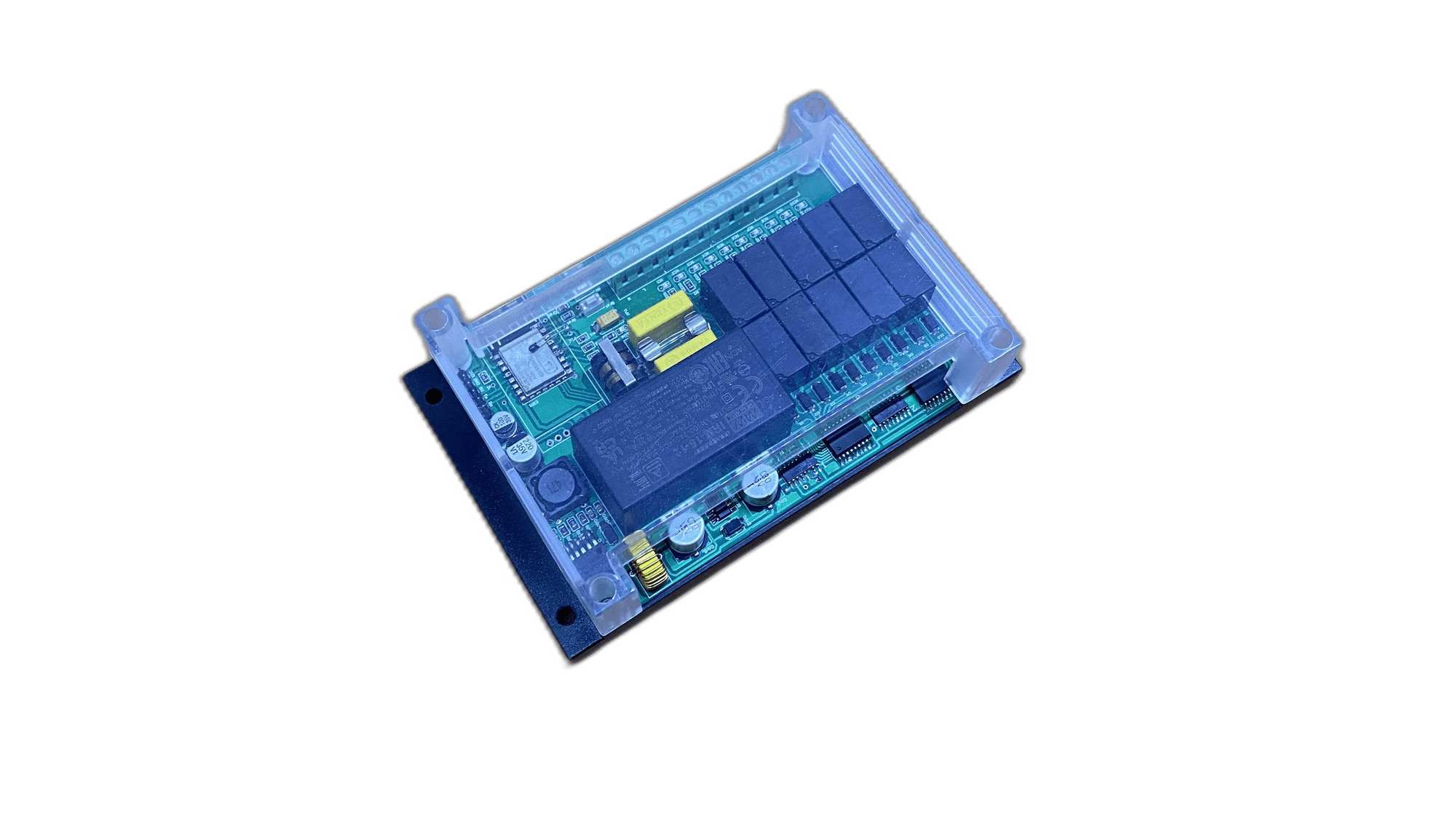
10-channel Wi-Fi/LoRa controller
MEI ECO 10-channel controller is a smart remote control solution using the STM32 platform, supporting LoRa or WiFi connection. The device integrates 10 independent relay/MOSFET channels to control pumps, solenoid valves, fans, lights and industrial equipment. Supports manual control, timer, automatic scenario and sensor linkage. Status data, voltage, load current, temperature and alarms are monitored in real time on the MEI ECO Web/App. The device has OTA, watchdog, anti-EMI interference and 24/
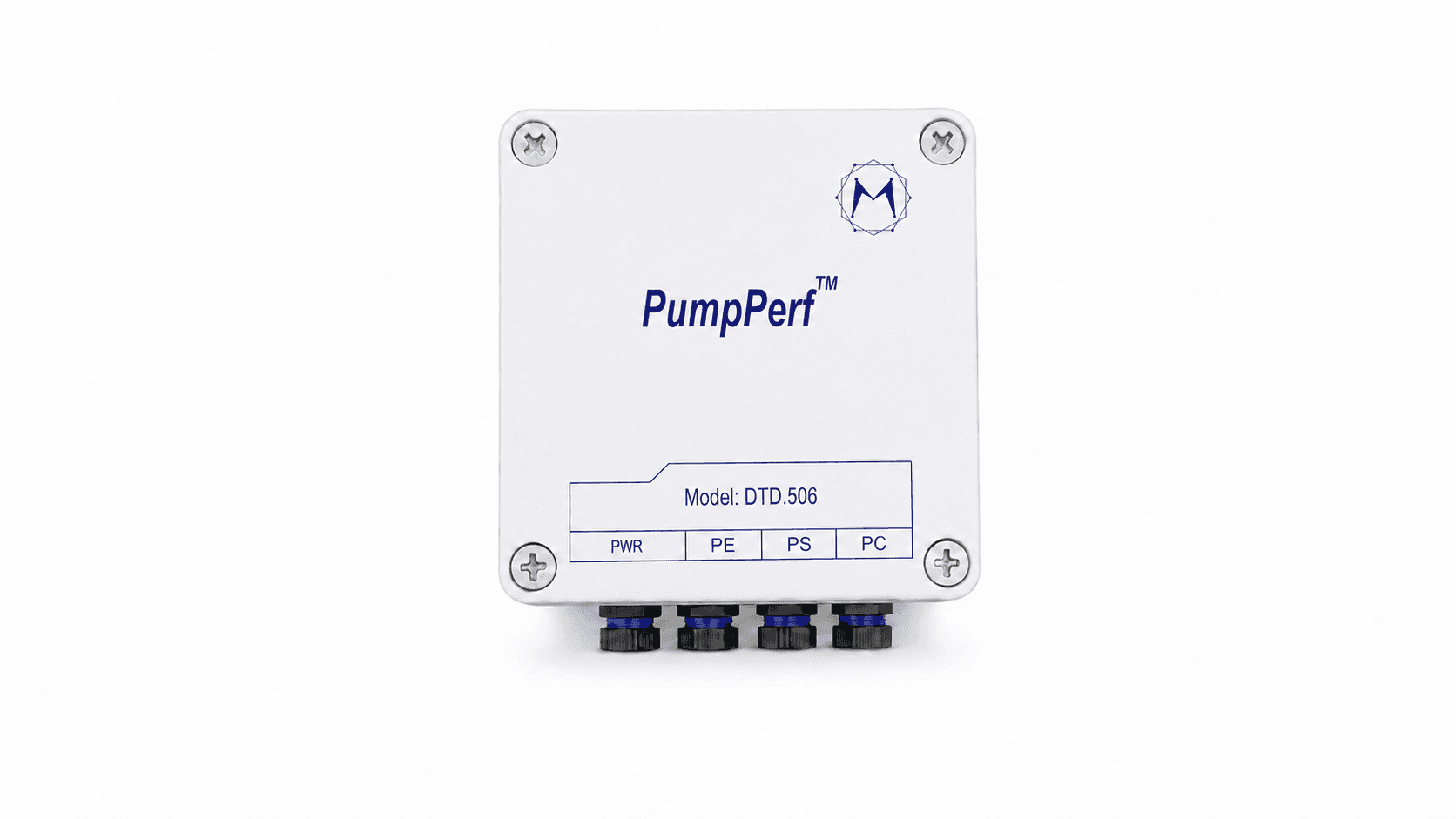
PumpPerf - DTG.500
MEI pump performance analysis system allows to evaluate the relationship between flow (Q) and pressure/water column (H) during the actual operation of the pumping station. The device collects data from flow sensors (pulse, M-Bus, Modbus) and 4–20mA/LoRa pressure sensors, then automatically “counts samples”, filters noise and creates data groups that accurately reflect the pump characteristic curve according to each operating condition. Automated construction system Q–H characteristic curve, displ
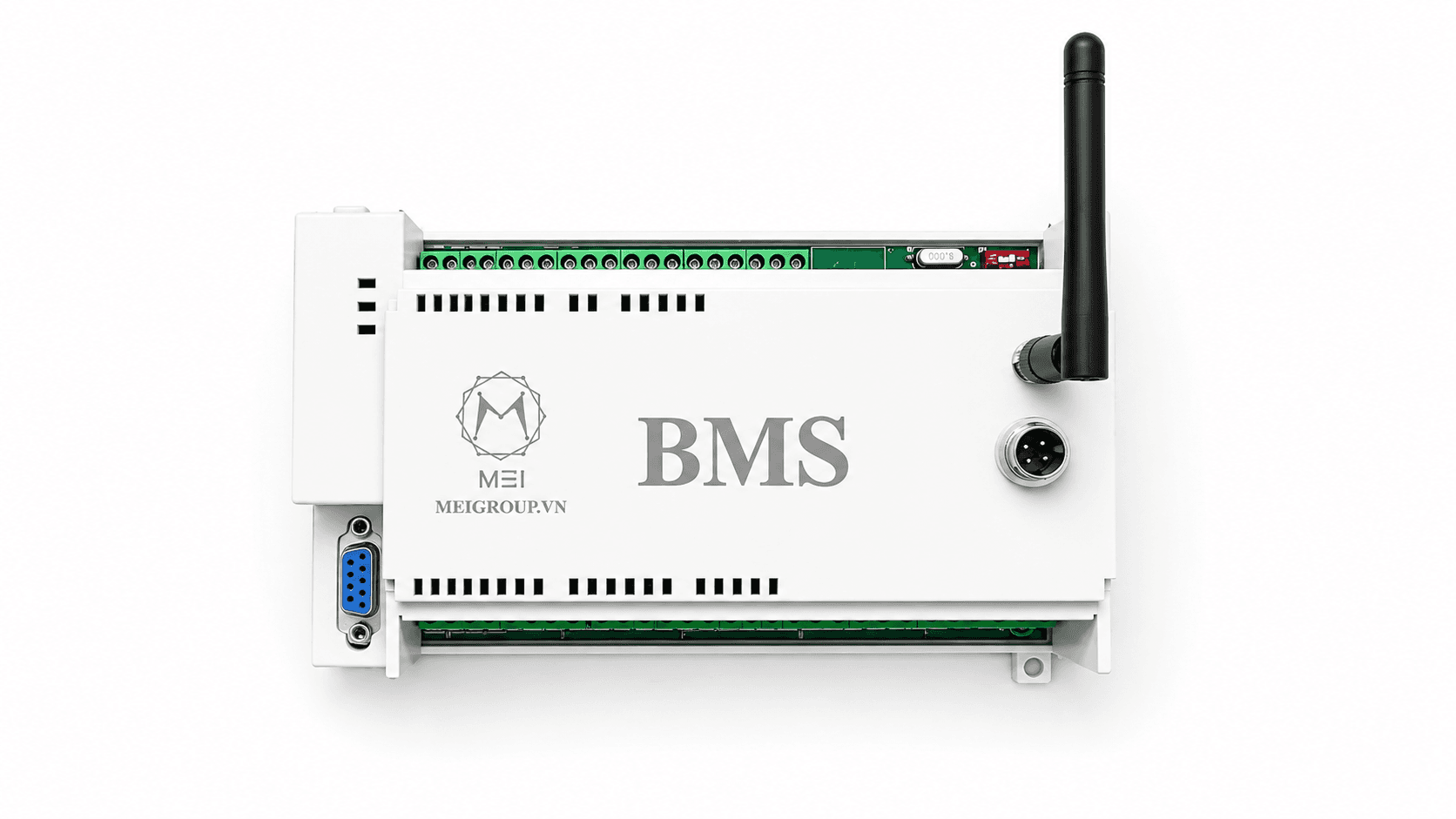
BMS - CTG.050
Level 1 pumping station monitoring and control equipment of MEI GROUP is a smart controller for raw water exploitation pumping stations, well pumping stations and upstream water supply systems. The device allows simultaneous control priming pump, submersible pump, drain pump following an automated process, ensuring safe and continuous operation. The device collects data from well water level sensors, pressure sensors, flow sensors, motor temperature and electrical cabinet status. Based on this da
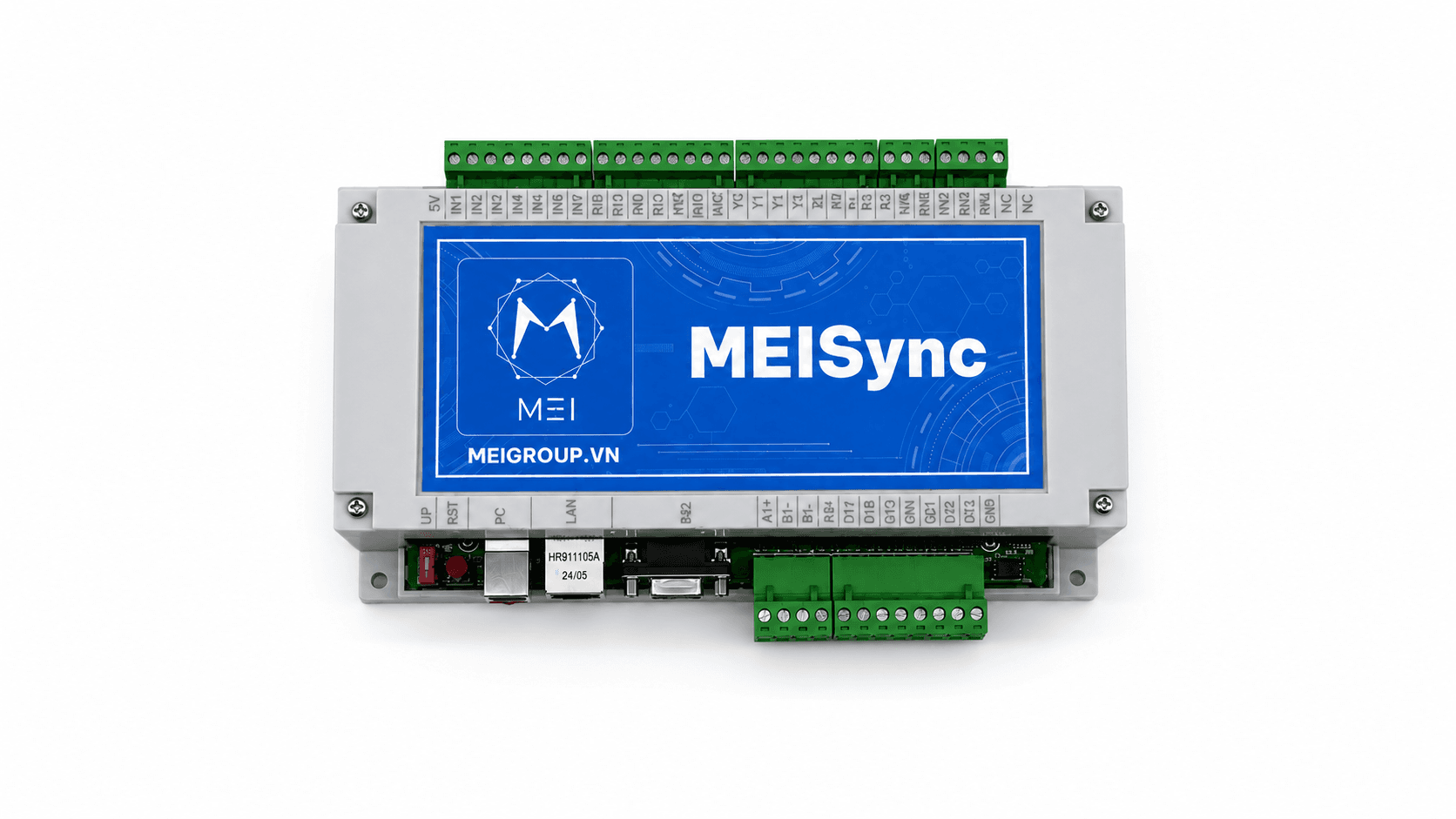
MEISync - CTG.200
The MEI central controller is designed for industrial monitoring and control applications, water infrastructure, pumping stations and environmental monitoring. The device uses high-performance STM32F407 microcontroller, supporting RS485 connection, Ethernet, digital input, control relay and field sensor. Integrated data storage, real-time clock, remote program update (OTA) and Watchdog anti-crash mechanism. The solution allows data collection, status monitoring and remote device control via Web/
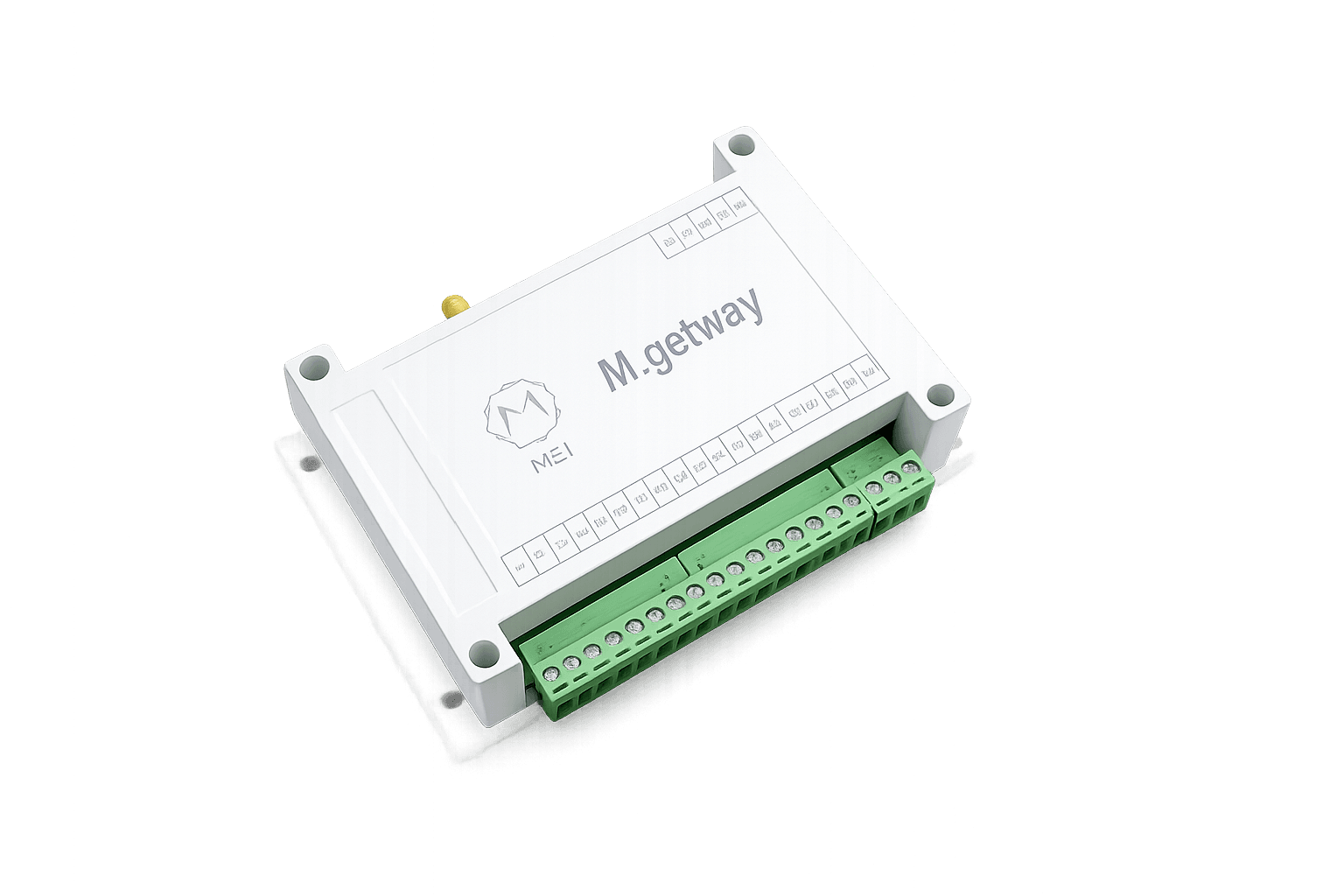
Industrial IoT Gateway
IoT Gateway MEI GROUP is a central data collection and transmission device for the factory, supporting connectivity LAN Ethernet combined with the network LoRa UART to build a distributed monitoring system without pulling long RS485 wires. Gateway uses ESP32 dual-core 240MHz, operates stably 24/7 and integrates WiFi/LAN for SCADA, MES or internal server connection via MQTT/MQTTS, HTTP/HTTPS or WebSocket. Support equipment M-Bus/RS485 Modbus RTU to read electronic water meters, industrial sensors
Office: 585/12/18 National Highway 13, Hiep Binh Ward, Ho Chi Minh City, VietnamR&D office: 121 Street No. 339, Phuoc Long B Ward, City. HCMWorking hours: 08:00 - 17:00 (Monday to Saturday)
Support

- FAQ
- Resources
- Distributor
- Technical Support
MEIGROUP DOWNLOAD